Do First-Time Buyers Pay Stamp Duty Over £300,000?
Do first-time buyers pay stamp duty over £300k? Yes. Above £300,000 a first-time buyer pays 5% on the part of the price up to £500,000. Use the Joint First-Time Buyer Stamp Duty Calculator to work out your exact bill in seconds.
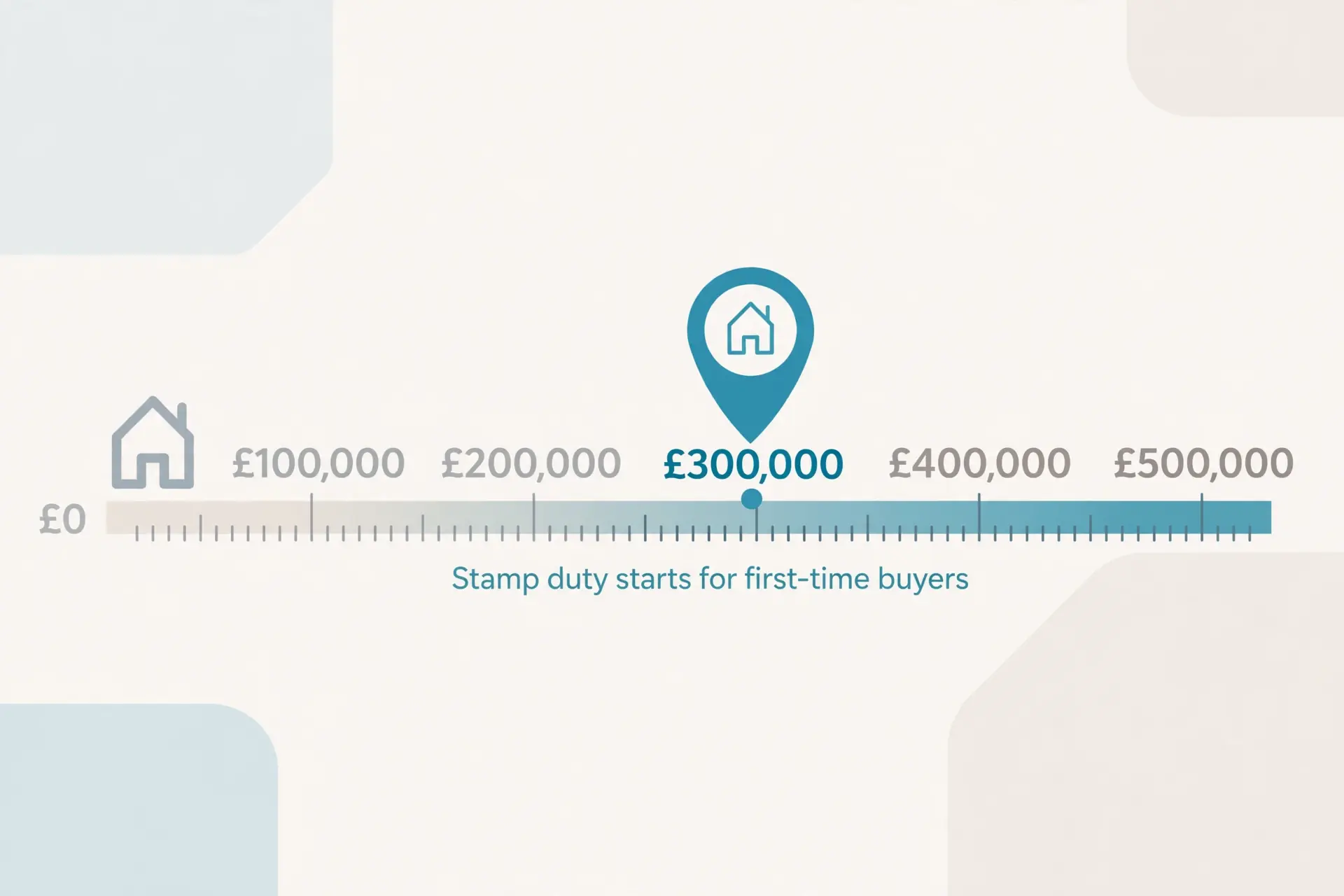
Direct answer: Yes, first-time buyers in England or Northern Ireland pay stamp duty over £300,000: 5% on the part of the price from £300,001 to £500,000, according to GOV.UK and HMRC guidance. On a £400,000 first home that means £5,000, which is 5% of the £100,000 above £300,000.
Key Takeaways
The short version: the £300,000 line is where the bill starts, not where the relief ends.
- First-time buyers pay nothing up to £300,000, then 5% on the slice from £300,001 to £500,000.
- A £350,000 first home costs £2,500. A £400,000 first home costs £5,000. A £500,000 first home costs £10,000.
- The 5% applies only to the part above £300,000, not to the whole price, as long as the price is £500,000 or less.
- Above £500,000 the relief is lost on the whole price, and the normal standard rates apply from £0.
- If you buy jointly, every buyer must be a first-time buyer or the relief is lost entirely.
- This guide covers completions on or after 1 April 2025.
How much do you pay just over £300,000?
Just over £300,000, the bill is small, because the 5% rate applies only to the part above £300,000. On a £310,000 first home the bill is £500.
The maths is 5% of the amount above £300,000. On a £310,000 home, £310,000 minus £300,000 is £10,000, and 5% of £10,000 is £500. On a £350,000 home, £350,000 minus £300,000 is £50,000, and 5% of £50,000 is £2,500. The table below shows the bill at prices just above the threshold, using the GOV.UK and HMRC relief bands.
| Purchase price | Amount above £300,000 | Stamp duty for a first-time buyer | |---|---| | £300,000 | £0 | £0 | | £310,000 | £10,000 | £500 | | £320,000 | £20,000 | £1,000 | | £350,000 | £50,000 | £2,500 | | £400,000 | £100,000 | £5,000 | | £500,000 | £200,000 | £10,000 |
Is the 5% charged on the whole price or only on the part above £300,000?
The 5% is charged only on the part above £300,000, as long as the price is £500,000 or less. The first £300,000 stays tax-free for a first-time buyer.
This is how the banded system works. Stamp duty is charged in slices, and each slice has its own rate. For a first-time buyer the first slice, up to £300,000, is taxed at 0%, and the next slice, from £300,001 to £500,000, is taxed at 5%. That is why a £400,000 home costs £5,000 and not £20,000: only the £100,000 above £300,000 is taxed, at 5%. The same banded idea applies to the standard rates, which are 0% to £125,000, 2% from £125,001 to £250,000, 5% from £250,001 to £925,000, 10% from £925,001 to £1,500,000 and 12% above £1,500,000, according to GOV.UK and HMRC guidance.
What if one of the joint buyers is not a first-time buyer?
If one joint buyer has owned a home before, the relief is lost entirely and the standard rates apply to the whole price. On a £400,000 home that turns a £5,000 bill into a £10,000 bill.
The joint rule is all or nothing. GOV.UK states the rule plainly: all joint buyers must be first-time owners, and if even one person on the mortgage has owned a home before, there is no relief. So a couple buying a £400,000 home together pays £5,000 if both are first-time buyers, and £10,000 if one of them has owned before, because the standard rates then apply: 0% on the first £125,000, 2% on the next £125,000 (£2,500), and 5% on the remaining £150,000 (£7,500). For the full worked comparison, read Stamp Duty If One Person Is a First-Time Buyer.
Frequently asked questions
Do first-time buyers pay stamp duty over £300,000?
Yes. First-time buyers in England or Northern Ireland pay 5% on the part of the price from £300,001 to £500,000. On a £400,000 first home that means £5,000.
Is the 5% charged on the whole price or only on the part above £300,000?
The 5% is charged only on the part above £300,000, as long as the price is £500,000 or less. The first £300,000 stays tax-free for a first-time buyer.
What if one of the joint buyers is not a first-time buyer?
If one joint buyer has owned a home before, the relief is lost entirely and the standard rates apply to the whole price. On a £400,000 home that turns a £5,000 bill into a £10,000 bill.
How to Use the Joint First-Time Buyer Stamp Duty Calculator
Test the price you are looking at on the calculator in seconds: type it in, mark each buyer as a first-time buyer or not, and the result appears at once with a band-by-band breakdown.
The Joint First-Time Buyer Stamp Duty Calculator charges nothing, answers immediately and asks for no email address. You get the total bill, a band-by-band breakdown so the maths is clear, and the effective rate, which is the total bill divided by the price. For joint buyers it shows the relief bill and the standard bill together, so the price of one previous owner is plain to see. Try the presets at £300,000, £400,000, £450,000 and £500,000 to watch the bill climb once the price passes £300,000. If your price is near £500,000, read First-Time Buyer Stamp Duty Over £500,000: The Cliff Rule next, because the bill jumps sharply once the price passes £500,000.
Sources
Every figure in this post comes from the official sources listed below.
- GOV.UK and HMRC, residential property rates and first-time buyers relief (post-1-April-2025 bands, published by GOV.UK and HMRC).
Disclaimer: Estimates only, not financial advice. Cross-check the figures with HMRC guidance or a qualified tax adviser before you complete.
Last verified: 16 November 2026