The 60% Tax Trap Explained: Why £100k to £125,140 Is the Worst Pay Rise in the UK
Use the 60% Tax Trap Calculator to check your own numbers in seconds, and see the Adjusted Net Income mode if your question is about Adjusted Net Income.
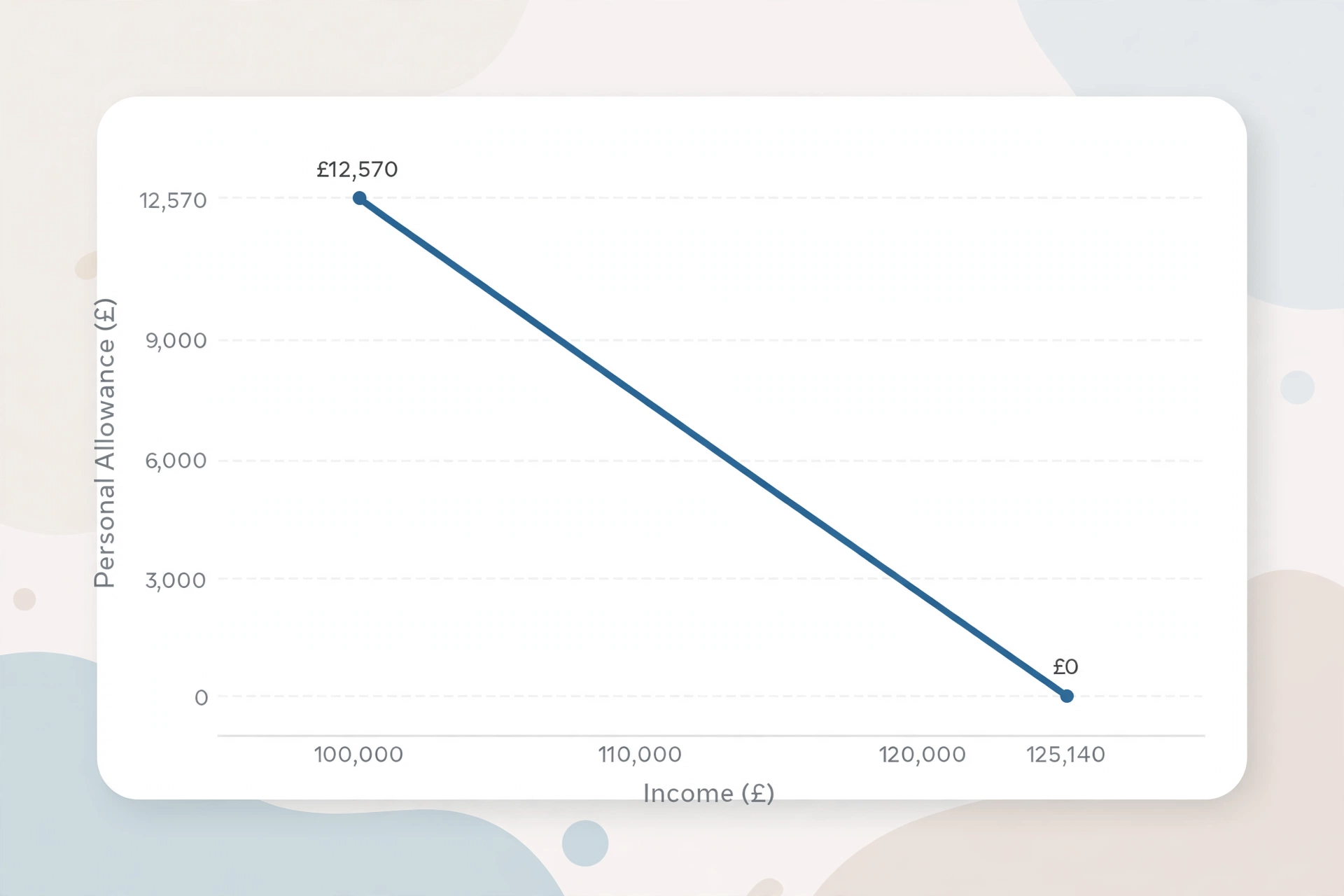
Direct answer: This guide explains how the £100k tax trap works. If your Adjusted Net Income is between £100,000 and £125,140, you lose £1 of the £12,570 Personal Allowance for every £2 over £100,000, according to HMRC personal allowance taper rules. That loss creates an effective marginal rate of 60% on income in that band, and the Personal Allowance reaches zero at £125,140.
Key Takeaways
- The trap runs on Adjusted Net Income, not on salary alone.
- Personal Allowance is £12,570, according to GOV.UK income tax allowances.
- You lose £1 of allowance for every £2 of Adjusted Net Income over £100,000, according to HMRC taper rules.
- The allowance is gone at £125,140, and the effective rate in the band is 60%.
What is the 100k tax trap?
The 100k tax trap is the loss of Personal Allowance between £100,000 and £125,140 of Adjusted Net Income, which creates a 60% effective marginal rate.
The trap is not a separate tax. It is the taper of the Personal Allowance. HMRC taper rules say the allowance falls by £1 for every £2 of Adjusted Net Income over £100,000. Because that lost allowance is then taxed, the effective rate on income in the band is 60%. The 60% figure is an effective rate, not an official tax rate.
Why is it called the worst pay rise?
A pay rise inside the trap can leave you with far less extra take-home pay than you expect, because the allowance loss adds to the tax on the rise.
Take a simple case. Your Adjusted Net Income rises from £100,000 to £110,000. That is £10,000 more income. You lose £5,000 of Personal Allowance, so your remaining allowance is £7,570. That £5,000 of lost allowance is itself taxed at 40%, which adds £2,000, so the extra tax on the £10,000 rise is £6,000 in total, which is 60% of the rise. That is why the band feels like a trap. The rise is real, but the tax cost is higher than the rate on a normal pay rise.
Who does the trap affect?
It affects anyone whose Adjusted Net Income is over £100,000, including salary, bonus, dividends and other taxable income counted in Adjusted Net Income.
Salary alone does not decide it. Pension contributions and cash Gift Aid donations reduce Adjusted Net Income, under the HMRC definition. That is why two people on the same salary can sit on different sides of the trap.
What are the key numbers?
The key numbers are £100,000, £125,140, £12,570 and 60%, all from HMRC and GOV.UK sources.
| Figure | Value | Source |
|---|---|---|
| Personal Allowance | £12,570 | GOV.UK |
| Trap starts | £100,000 Adjusted Net Income | HMRC |
| Allowance gone | £125,140 Adjusted Net Income | HMRC |
| Taper | £1 lost per £2 over £100,000 | HMRC |
| Effective marginal rate | 60% | HMRC taper rule, worked out |
Frequently asked questions
What is the 100k tax trap?
It is the loss of Personal Allowance between £100,000 and £125,140 of Adjusted Net Income, which creates a 60% effective marginal rate.
At what income does the trap start?
It starts when Adjusted Net Income goes over £100,000, according to HMRC taper rules.
Is 60% an official tax rate?
No. It is an effective marginal rate worked out from the taper rule, not an official HMRC tax rate.
How to Use the 60% Tax Trap Calculator
Put the explanation above to work on your own pay. The calculator is free to use, gives an answer straight away, and never asks for an email address.
Open the 60% Tax Trap Calculator and type in your salary, any bonus, your pension contribution, dividends, other income and cash Gift Aid, then watch the trap appear in your own figures. It shows your Adjusted Net Income, how much Personal Allowance you have lost and how much is left, how far you sit from £100,000, and your marginal rate.
If the Adjusted Net Income sum is all you need, switch to the Adjusted Net Income mode and skip the rest.
What makes it worth opening is the solver: it works out the exact pension or Gift Aid figure that brings you back under £100,000, and the childcare panel flags whether Tax-Free Childcare and 30 hours eligibility are lost at your income, so a pay rise is judged on its full cost.
For more on the same cluster, read the related post The 60% Tax Trap, Worked Out With Real Numbers, which runs the £110,000 case line by line, so you can see the allowance fall in numbers.
Sources
- HMRC, personal allowance taper rules: Personal Allowance £12,570, taper £1 lost for every £2 of Adjusted Net Income over £100,000, allowance gone at £125,140.
- GOV.UK, Income Tax rates and Personal Allowances: 2026/27 bands are 20% basic rate on taxable income up to £37,700, 40% higher rate from £37,701 to £125,140, and 45% additional rate over £125,140, with a £12,570 Personal Allowance.
- GOV.UK, Tax-Free Childcare and free childcare for working parents: top-up of £2 for every £8 paid in, up to £2,000 a year per child, and 30 hours a week for 38 weeks, which is 1,140 hours a year, with eligibility lost only when expected Adjusted Net Income is over £100,000.
Disclaimer: Estimates only, not financial advice. Verify with HMRC guidance or a qualified tax adviser.
Last verified: 16 November 2026