Does the State Pension Affect Your Personal Allowance?
Yes, the State Pension uses up your Personal Allowance. Every pound of State Pension counts as taxable income and sits inside the £12,570 allowance first. Use the State Pension Breach Year Calculator to see how much of your allowance your pension uses up and when it passes the limit.
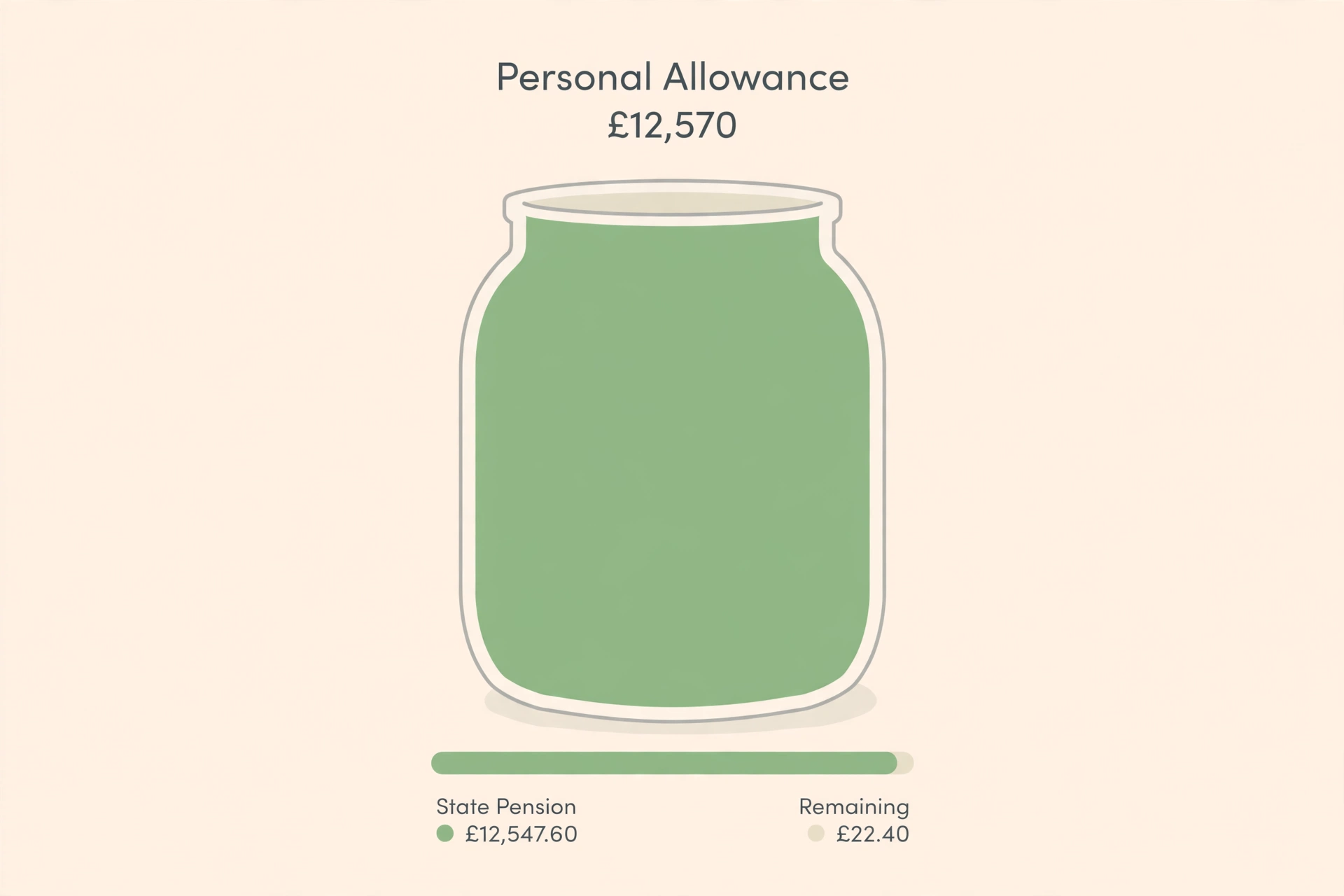
Direct answer: Yes, the State Pension affects your Personal Allowance because it counts as taxable income, according to GOV.UK and LITRG. In 2026/27 the full new State Pension is £12,547.60 a year, which uses up all but £22.40 of the £12,570 Personal Allowance, so only £22.40 of allowance is left for other income.
Key Takeaways
- The State Pension is taxable income, so it counts towards your Personal Allowance.
- The Personal Allowance is £12,570, frozen until April 2031, according to GOV.UK.
- In 2026/27 the full new State Pension leaves only £22.40 of allowance spare.
- In 2027/28 the full new State Pension is £13,036.40 a year, which is £466.40 more than the allowance.
- Other income on top of the State Pension is taxed once the allowance is used up.
How does the State Pension use up the Personal Allowance?
Your Personal Allowance is the amount of income you can receive each tax year before you pay income tax. The State Pension counts as income for this purpose. It is added to your other taxable income, and the total is compared with the £12,570 allowance.
Think of the allowance as a pot. Your State Pension fills it first. In 2026/27 a full new State Pension fills £12,547.60 of the £12,570 pot. That leaves £22.40 for anything else, such as a small private pension or savings interest.
Why does it feel like the State Pension is deducted from the allowance?
It feels that way because the tax system works through your tax code. HMRC puts the State Pension amount into your tax code so that tax on your other income reflects the pension you already receive. The pension itself is paid gross by the Department for Work and Pensions, with no tax taken off, according to GOV.UK and LITRG.
Many pensioners first notice this when their tax code changes. A code that used to give the full £12,570 allowance shrinks because HMRC has counted the State Pension inside it. The money is not taken from your pension. The allowance is simply used up by it.
What happens when the pension passes the allowance?
When the State Pension alone passes £12,570, the excess is taxable income. For the full new State Pension that happens in 2027/28, when it reaches £13,036.40 a year. That is the breach year.
The breach year is not the year tax starts for state-pension-only income. The Pension Tax Allowance, announced in the 28 October 2026 Budget, with legislation to be introduced in Finance Bill 2026-27, cancels the tax on state-pension-only income until 2030/31. The Pension Tax Allowance figures follow GOV.UK HM Treasury. See also our post on what happens if your State Pension is above the Personal Allowance for the full year-by-year picture.
Does other income change the answer?
Yes. Once the State Pension has used up your allowance, other income is taxed from the first pound. A private pension of £2,000 a year on top of a full State Pension would be taxed at the 20% basic rate in 2026/27, because only £22.40 of allowance is left.
That is also why the Pension Tax Allowance taper matters. The allowance tapers by £1 for every £3 of income above £13,036.40, and it runs out at £13,316.24. Budget 2026 Annex A publishes £13,319 as the rounded end of the taper, because Annex A rounds the pension to £13,037 and the allowance to £94. Other income pushes you through that taper sooner. Check your own total before you assume you pay no tax.
Frequently asked questions
Does State Pension affect personal allowance?
Yes. The State Pension counts as taxable income and uses up your Personal Allowance first, according to GOV.UK and LITRG. In 2026/27 the full new State Pension leaves only £22.40 of the £12,570 allowance spare.
Why is my State Pension deducted from my personal allowance?
HMRC counts the State Pension inside your tax code, so your allowance looks smaller on your code. The pension itself is paid gross with no tax taken off.
What happens when the State Pension passes the Personal Allowance?
The excess becomes taxable income. For the full new State Pension this happens in 2027/28 at £13,036.40 a year, but the Pension Tax Allowance cancels the tax for state-pension-only income until 2030/31.
How to use the State Pension Breach Year Calculator
Open the State Pension Breach Year Calculator and enter your State Pension amount first, then any other taxable income, because the pension eats into the allowance before anything else does. The result tells you how much of the £12,570 allowance your pension uses up, the year it passes the limit, and the year tax actually starts once the Pension Tax Allowance is applied.
The benefits are simple. You find out exactly how much allowance is left for other income, which is £22.40 on the full new State Pension in 2026/27 and nothing at all from 2027/28. The year-by-year view from 2026/27 to 2030/31 shows that spare allowance shrinking to zero and then turning into an excess. It is free to use, with no email gate and no sign-up.
Sources
- GOV.UK, income tax allowances: Personal Allowance £12,570, frozen until April 2031.
- GOV.UK, State Pension rates: full new State Pension £241.30 a week in 2026/27 and £250.70 a week in 2027/28.
- GOV.UK and LITRG: the State Pension is taxable income but is not taxed at source.
- GOV.UK HM Treasury, 28 October 2026 Budget: Pension Tax Allowance figures.
Disclaimer: Estimates only, not financial advice. Verify with HMRC guidance or a qualified tax adviser.
Last verified: 16 November 2026