Is the State Pension Classed as Income? Yes, and Here Is How HMRC Collects the Tax
Many pensioners ask whether the State Pension counts as income at all. It does. It counts as taxable income, and that one fact drives everything else: the tax code, the Simple Assessment letter, and the trap itself. Use the State Pension Tax Trap Calculator to see what it means for your own figures.
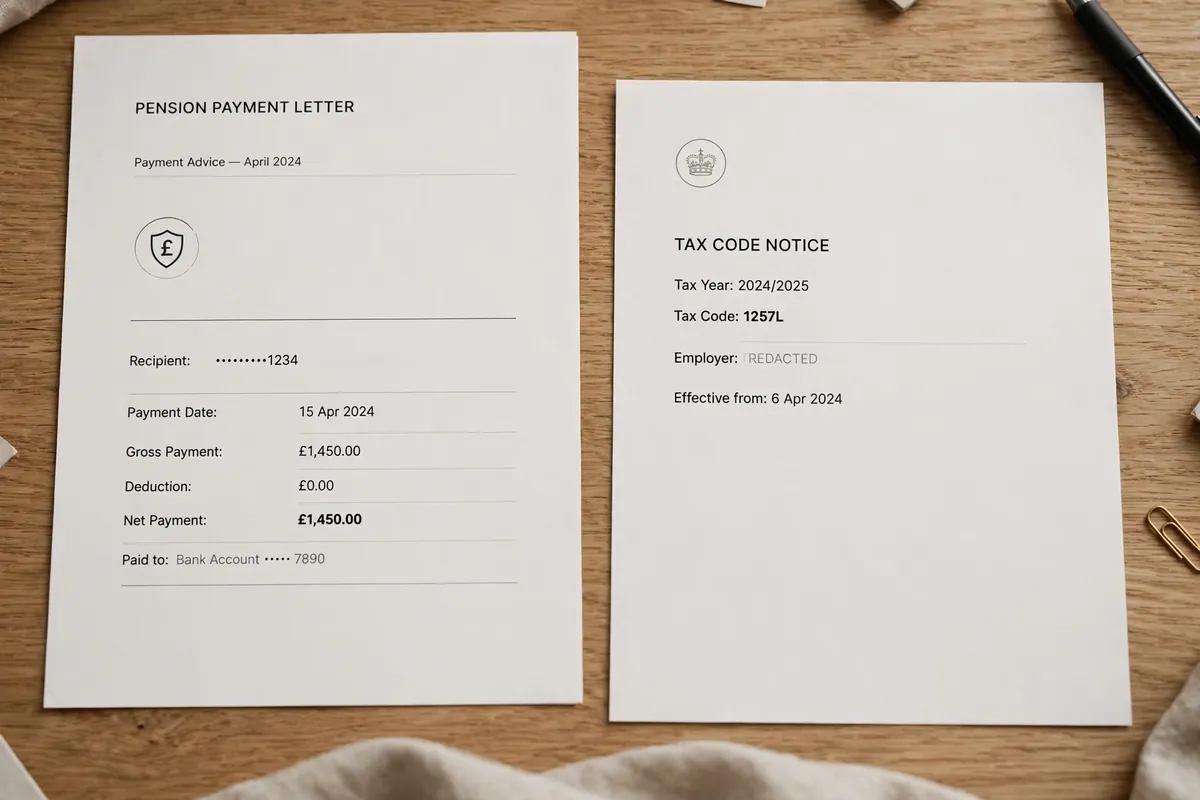
Direct answer: Yes, the State Pension is classed as taxable income, according to GOV.UK and HMRC. It is paid gross with no tax taken off, and HMRC collects any tax due through PAYE on your other income, through Simple Assessment, or through Self Assessment.
Key Takeaways
- The State Pension is taxable income, not a tax-free benefit.
- DWP pays it gross. No PAYE is taken off the State Pension itself.
- HMRC collects the tax from your other income, usually by adjusting your tax code.
- If you have no other income to collect from, HMRC may send a Simple Assessment bill.
- The Personal Allowance of £12,570 decides whether any tax is actually due.
Is the State Pension classed as income?
Yes. The State Pension is income for tax purposes. That is the position stated by GOV.UK and HMRC, and recorded in the House of Commons Library briefing CBP-10250, “Taxation of state pension”, published 13 November 2026. It sits alongside private pension income, work income, and savings interest in your total taxable income. Being classed as income does not mean you always pay tax on it. It means it counts toward the £12,570 Personal Allowance, and tax is due only on the total above that line.
| Income type | Taxable? | Tax taken off at source? |
|---|---|---|
| State Pension | Yes | No, paid gross by DWP |
| Private pension | Yes | Yes, usually through PAYE |
| Work income | Yes | Yes, through PAYE |
| Pension Credit | No, tax-free state benefit | No, see GOV.UK |
How does HMRC collect tax on the State Pension?
HMRC collects the tax in three ways. First, through PAYE on your other income. HMRC usually gives your private pension a tax code that leaves room for the State Pension, so the tax on the State Pension comes off your private pension payments. Second, through Simple Assessment. If there is no other income to take the tax from, HMRC works out the bill and sends it to you. Third, through Self Assessment, if you already file a tax return. The method changes, but the rule does not. The tax is on your total income above the allowance.
Why does this confuse so many pensioners?
Because the money arrives in full. When a payment lands in your bank account with nothing taken off, it feels tax free. It is not. The tax is simply collected somewhere else, or later. The second source of confusion is the tax code. HMRC prioritises the Personal Allowance against the State Pension, so your private pension tax code can look odd. If the code is wrong, you can overpay tax, and that is how P800 letters and reclaim claims arise. Check your tax code, and check any P800 against your own figures before you accept it.
Frequently asked questions
Is State Pension classed as income? Yes. It is taxable income, according to GOV.UK and HMRC, and it counts toward your Personal Allowance.
Why is no tax taken off my State Pension? Because DWP pays it gross. HMRC collects the tax from your other income instead, usually through your tax code or a Simple Assessment.
Does my private pension reduce my State Pension? No. Your private pension does not reduce the State Pension itself. It adds to your total taxable income, which can push you over the allowance and into tax.
How to use the State Pension Tax Trap Calculator
Test whether your own State Pension counts toward tax with the State Pension Tax Trap Calculator. Start with the gross State Pension, since DWP takes nothing off it, then add private pension, savings interest, and wages. The answer shows the total HMRC sees, the tax on the part above £12,570, and the room left under the line. Do this before you ring HMRC about a tax code, because the code only makes sense once you know the total it is built on.
Related reading: How Much Tax Do You Pay on a UK State Pension?
Sources
- GOV.UK and HMRC, Income Tax rates and Personal Allowances: Personal Allowance £12,570.
- House of Commons Library briefing CBP-10250, “Taxation of state pension”, 13 November 2026: State Pension is taxable income, paid gross, tax collected via PAYE, Simple Assessment, or Self Assessment.
- GOV.UK, “Income Tax: tax-free and taxable state benefits”: Pension Credit is a tax-free state benefit.
Disclaimer: Estimates only, not financial advice. Verify with HMRC guidance or a qualified tax adviser.
Last verified: 16 November 2026